How Do You Choose an Exhibit House?
The best way to choose an exhibit house is to compare companies based on their experience, capabilities, communication, service offerings, and total costs, not just their designs or initial quotes. You want a partner that understands your trade show goals, can support your exhibit requirements, and has a reliable process for delivering what they promise.
Sounds simple enough, right?
Then you start looking at portfolios filled with gorgeous booths, impressive graphics, and elaborate displays.
Suddenly, everybody looks like a winner.
But here's the thing: You're not shopping for artwork to hang over your fireplace.
You're choosing a company that may be responsible for a significant investment, complicated logistics, and some pretty important deadlines.
So let's talk about how to find an exhibit house that makes your job easier instead of adding another layer of stress.
And if you're still not sure you need one at all, start by asking whether you should hire an exhibit house in the first place.
Start With Your Trade Show Goals
Before contacting exhibit houses, get clear about what you're trying to accomplish.
I know. I sound like a broken record.
But your goals should drive your trade show decisions, and selecting an exhibit partner is no exception.
Consider:
- Your Objectives: Are you launching a product, generating leads, strengthening relationships, or increasing brand awareness?
- Your Audience: Who needs to visit your booth, and what experience will help you connect with them?
- Your Exhibit Requirements: Do you need product demonstrations, meeting areas, storage, or specialized equipment?
- Your Show Schedule: How many events do you attend, and where are they located?
- Your Booth Sizes: Will you use the same footprint at every event or need multiple configurations?
- Your Budget: What can you realistically spend on the exhibit and its ongoing operation?
The clearer you are about your requirements, the easier it becomes to evaluate potential partners.
And the less likely you are to be distracted by features that look fabulous but don't actually support your objectives.
1. Look for Relevant Experience
Not every exhibit house specializes in the same types of projects.
Some focus on large custom exhibits. Others work extensively with modular systems, portable displays, or rental exhibits.
Some offer comprehensive exhibit management, while others concentrate primarily on design and production.
Start by looking for experience that matches your needs.
Ask:
- Have you worked with companies that have similar exhibit requirements?
- Can you show examples of projects comparable to ours?
- Do you regularly support the cities or venues where we exhibit?
- How do you handle different booth sizes and configurations?
- Can you provide references from clients with similar programs?
A portfolio is a good starting point.
But don't stop there.
You want to understand what the company actually managed, what challenges it encountered, and how it handled those challenges.
Pretty pictures only tell part of the story.
2. Evaluate Their Services
One exhibit house might handle design and production but leave shipping arrangements to you.
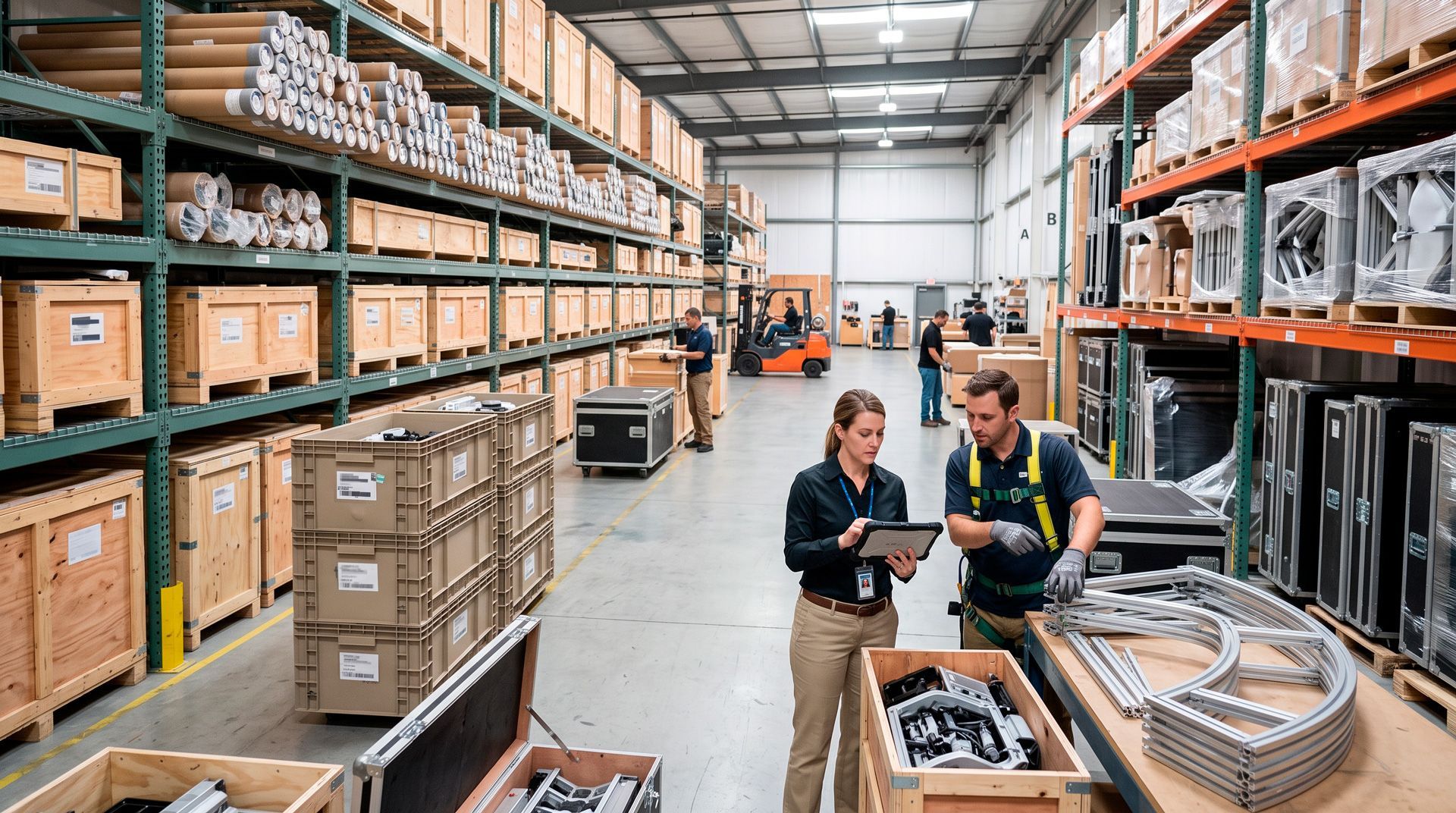
Another might offer storage, maintenance, project management, and installation coordination.
Neither approach is automatically better.
What matters is whether the services match your needs.
Ask about:
Design and Production
Who develops the concept? Who manufactures the components? How are changes handled?
Graphics and Branding
Who produces replacement graphics? How quickly can updates be completed?
Shipping and Logistics
Does the exhibit house arrange freight, coordinate deliveries, or work with your preferred carrier?
Installation and Dismantling
Does the company provide installation services, coordinate labor, or subcontract the work?
Storage and Maintenance
Where will your exhibit be stored? How are inventory, inspections, repairs, and replacements managed?
Project Management
Will you have a dedicated contact? Who tracks deadlines, coordinates vendors, and handles questions?
The goal is to identify exactly what the exhibit house will manage and what remains your responsibility.
That last part is especially important.
You don't want two people assuming the other person ordered electrical service.
Or worse, nobody ordering it at all.
3. Pay Attention to Communication
You can learn a lot about an exhibit house before signing a contract.
Are they responsive?
Do they ask thoughtful questions?
Do they explain their recommendations?
Do they listen when you describe your goals and concerns?
Or do they immediately start selling you the biggest, flashiest exhibit in their portfolio?
A good exhibit partner should be interested in understanding your business, not simply selling you booth components.
They should also be willing to explain trade-offs.
For example, a design feature might look impressive but increase shipping weight, require specialized installation, or create additional maintenance costs.
You deserve to know that before making a decision.
PRO TIP: Pay attention to how a company handles questions during the proposal process. That experience can offer valuable clues about what working together may be like later.
4. Compare Total Costs, Not Just Quotes
This is where smart exhibitors separate themselves from rookie exhibitors.
Let's say Exhibit House A submits a lower initial quote than Exhibit House B.
Easy decision?
Not so fast.
One proposal might include design, graphics, and project management.
The other might list those items separately.
One exhibit might require more shipping cases, additional labor, or specialized storage.
Another might cost more upfront but be easier to reconfigure for multiple shows.
Before comparing prices, make sure you're comparing the same scope of work.
Ask for a breakdown of:
- Design and production
- Graphics
- Project management
- Shipping and handling
- Installation and dismantling
- Storage
- Maintenance and repairs
- Replacement components
- Ongoing service fees
- Changes, rush orders, and additional work
Also clarify which charges come from the exhibit house and which are billed directly by show contractors or other vendors.
Remember, the price of the exhibit is only part of the equation.
What really matters is the cost of using and maintaining that exhibit throughout its expected life.
If you're still weighing whether to own an exhibit at all, read
Is It Better to Rent or Buy a Trade Show Booth?

5. Understand Who Will Manage the Details
Trade shows involve a surprising number of moving parts.
Freight arrangements, move-in schedules, service orders, installation crews, graphics, equipment, and venue requirements all need attention.
Before hiring an exhibit house, establish who is responsible for each activity.
For example:
| Responsibility | Who handles it? |
|---|---|
| Exhibit design approvals | Your team or designated decision-maker |
| Graphics production | Confirm with exhibit house |
| Freight arrangements | Confirm with exhibit house |
| Show-service orders | Assign explicitly |
| Installation coordination | Confirm with exhibit house |
| Onsite problem resolution | Assign a primary contact |
| Post-show inspection | Confirm with exhibit house |
| Storage and inventory | Confirm with exhibit house |
These assignments should be documented in your agreement or project plan.
And remember that individual shows may have specific rules governing contractors, installation labor, insurance documentation, and move-in procedures.
Even if an exhibit house handles these activities, make sure someone is verifying the requirements for each event.
You can delegate the work.
You shouldn't delegate away your awareness of what's happening.
6. Ask How They Handle Problems
Here's a question I wish more exhibitors would ask:
What happens when something goes wrong?
Because even with excellent planning, unexpected problems can happen.
Freight gets delayed.
Graphics arrive damaged.
A component goes missing.
A last-minute change becomes necessary.
Ask potential exhibit houses how they handle these situations.
Who do you contact?
Is onsite support available?
How are emergency repairs handled?
Who approves additional expenses?
What happens if the company or one of its subcontractors makes a mistake?
You don't need a partner who promises that nothing will ever go wrong.
You need one with a sensible plan for handling problems when they occur.
7. Check References and Past Performance
Before committing to a major project, speak with existing or previous clients whenever possible.
Ask questions that go beyond whether they liked the finished booth.
For example:
- Did the project stay within the agreed scope and budget?
- Were deadlines met?
- How responsive was the project manager?
- Were unexpected charges clearly explained?
- How did the company handle problems?
- Would you hire them again?
Also ask about ongoing support.
A company might do a fantastic job designing and producing an exhibit but struggle with maintenance, storage, or communication after the initial project.
If you're looking for a long-term partner, those details matter.
8. Review the Agreement Carefully
Before signing, make sure you understand what you're committing to.
Review:
Scope of Work
What is included, and what is excluded?
Pricing and Payments
What are the payment terms? How are additional expenses approved?
Ownership
Who owns the exhibit components, graphics, drawings, and design files?
Storage
What are the fees, access procedures, and conditions for retrieving your property?
Changes and Cancellations
What happens if your show schedule changes or you need to modify the project?
Damage and Liability
How are damage, insurance, and responsibility for repairs addressed?
Termination
What happens if you decide to move your exhibit to another provider?
Don't be afraid to ask questions.
A good business relationship starts with clear expectations.
And if an important promise isn't in the agreement, ask to have it documented.
9. Think About the Long-Term Relationship
If your company exhibits regularly, your exhibit house may become an ongoing partner.
That relationship can influence how efficiently you manage your trade show program.
Think about what happens after the first show.
Will the company help maintain your exhibit?
Can it accommodate changes in your show schedule?
Will it help evaluate worn or damaged components?
Can it support different booth configurations?
Will it communicate proactively about deadlines and decisions?
You want a company that can grow with your needs, not one that disappears until it's time to send another invoice.
Don't Forget Your Own Responsibilities
Even the best exhibit house can't make every decision for you.
Your company still needs to establish goals, approve budgets, understand the target audience, develop messaging, prepare booth staff, and evaluate results.
An exhibit house can help create an effective physical environment.
But your marketing and sales teams need to make that environment productive.
A booth full of expensive technology doesn't accomplish much if your staff spends the entire show staring at their phones.
Hello, Booth Zombies!
That's why choosing an exhibit house should be part of your overall trade show planning strategy, not an isolated purchasing decision.
The physical booth should support the conversations, demonstrations, and activities that move attendees toward becoming customers.
How Do You Make the Final Decision?
Once you've narrowed your choices, compare the finalists using the same criteria.
Consider their:
- Relevant experience
- Design and production capabilities
- Available services
- Communication and responsiveness
- Total costs
- Project management processes
- References
- Contract terms
- Long-term support
You can even create a simple scorecard to help your team evaluate each company consistently.
And don't automatically choose the lowest bidder.
Choose the company that offers the strongest combination of capabilities, reliability, value, and fit for your trade show program.
Sometimes that will be the least expensive option.
Sometimes it won't.
The important thing is knowing WHY you're making the decision.
Choose a Partner Who Helps You Succeed
Your exhibit house should make trade show planning more manageable, not more complicated.
The right partner understands your goals, communicates clearly, respects your budget, and helps you make informed decisions.
But remember, an exhibit house is only one piece of your trade show success.
You still need a solid plan for attracting attendees, preparing your staff, capturing qualified leads, and following up after the show.
When those pieces work together, you're in a much better position to turn your trade show investment into meaningful business results.
And THAT is what being a Booth Boss is all about.
Ready to Make Smarter Trade Show Decisions?
Booth Boss Bootcamp helps you understand the decisions, details, and processes involved in successful exhibiting so you can avoid costly mistakes, work confidently with vendors, and make every show count.
Frequently Asked Questions
How many exhibit houses should you compare?
Comparing approximately three qualified exhibit houses is a practical starting point for many projects. For complex or high-value exhibits, a more formal selection process may be appropriate. The important thing is to evaluate each company using consistent requirements and criteria.
What is the most important question to ask an exhibit house?
Ask exactly what the company will manage and what your team remains responsible for. Clear responsibilities help prevent missed deadlines, unexpected charges, and confusion during show preparation.
Should you choose a local or national exhibit house?
Either can be a good choice. A local exhibit house may offer convenient access and regional familiarity, while a national provider may have broader facilities or service coverage. Compare capabilities, service locations, logistics, responsiveness, and total costs rather than making geography the deciding factor.
Recent Posts