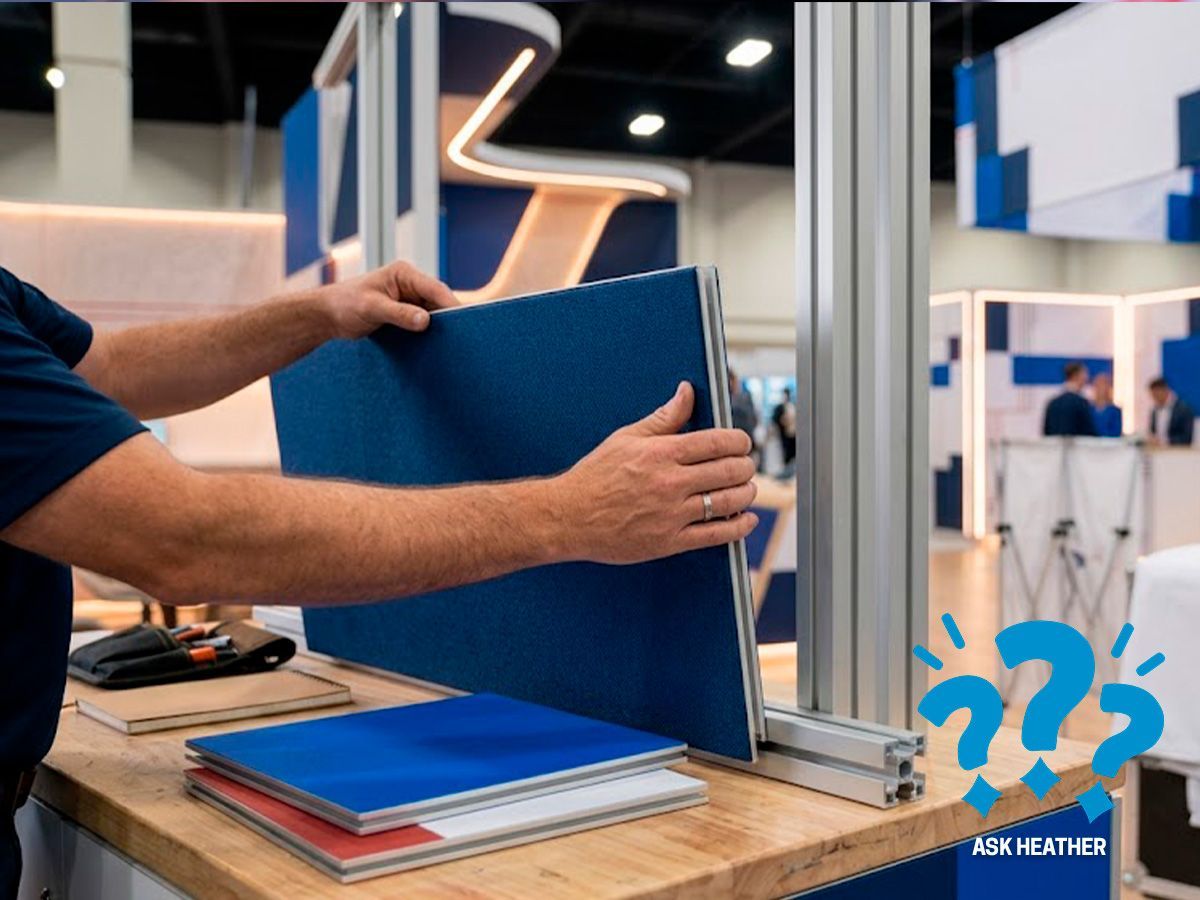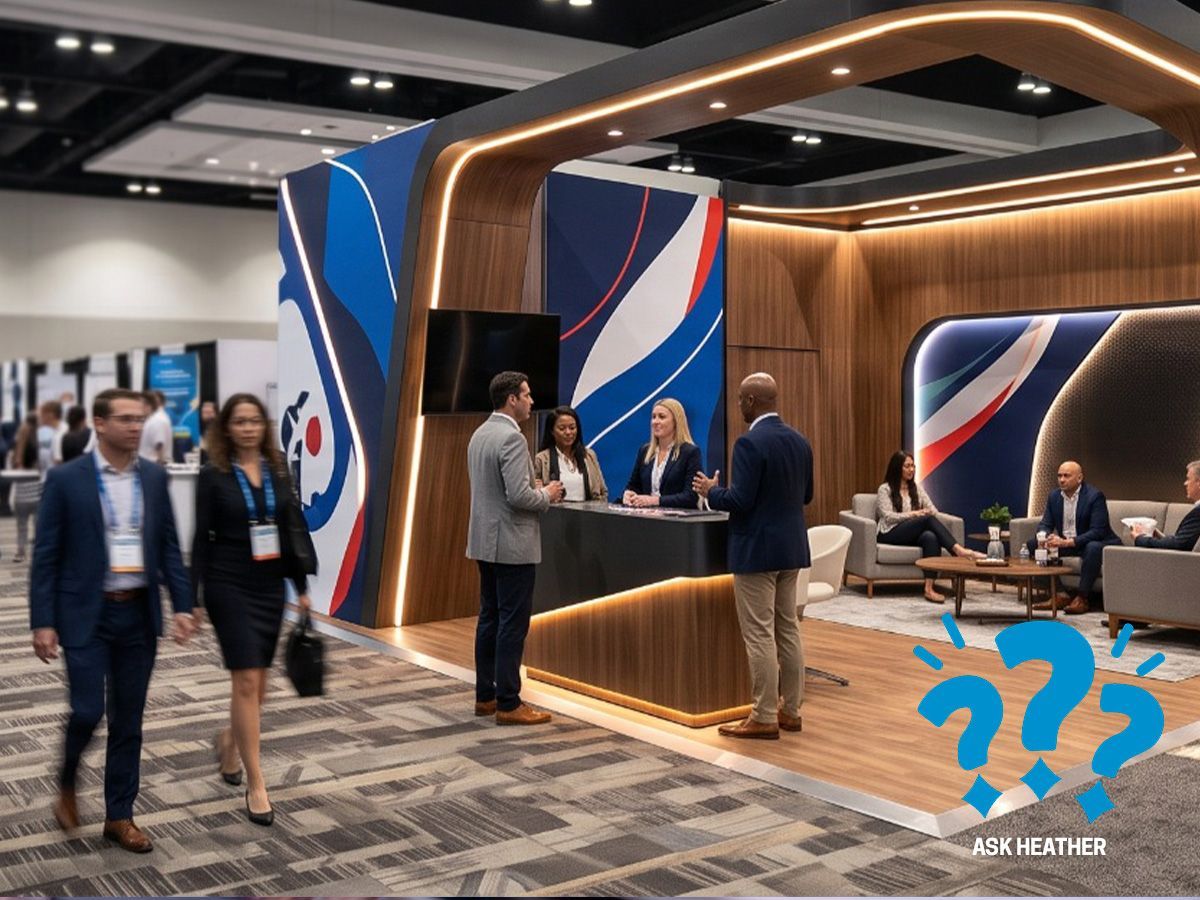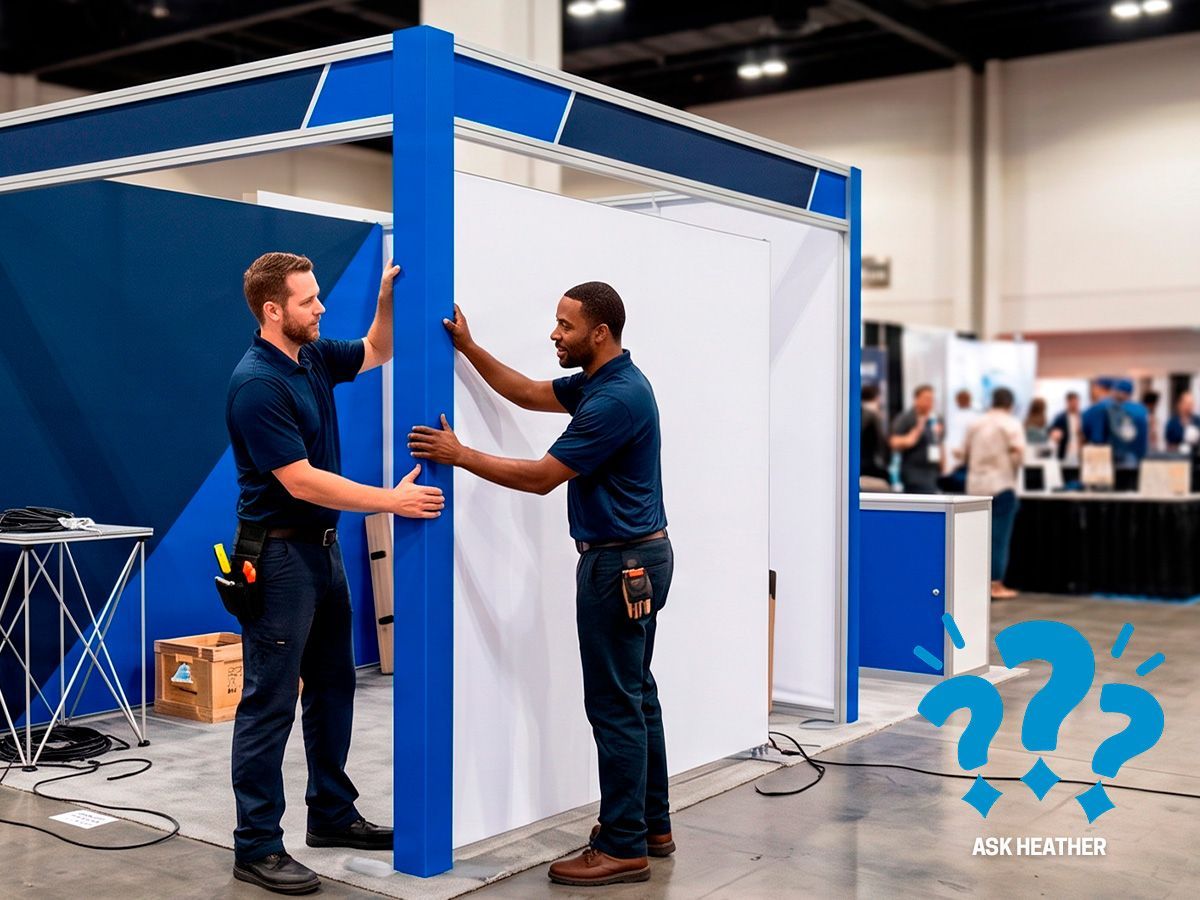
Should You Hire an Exhibit House?
Hiring an exhibit house can be a smart decision if you need professional help designing, producing, storing, transporting, or managing your trade show booth. But whether you actually NEED one depends on your exhibit, your team's capabilities, your trade show schedule, and your budget.
Some companies benefit tremendously from having an exhibit house manage the details. Others can handle much of the work themselves.
And here's something worth remembering: Hiring an exhibit house doesn't mean you have to hand over your entire trade show program.
You can outsource certain responsibilities while keeping others in-house.
The goal is to find the right balance of expertise, cost, and control so you can focus on what really matters: attracting the right attendees, generating qualified leads, and getting a return on your trade show investment.
Let's look at what an exhibit house actually does and when hiring one makes sense.
What Is an Exhibit House?
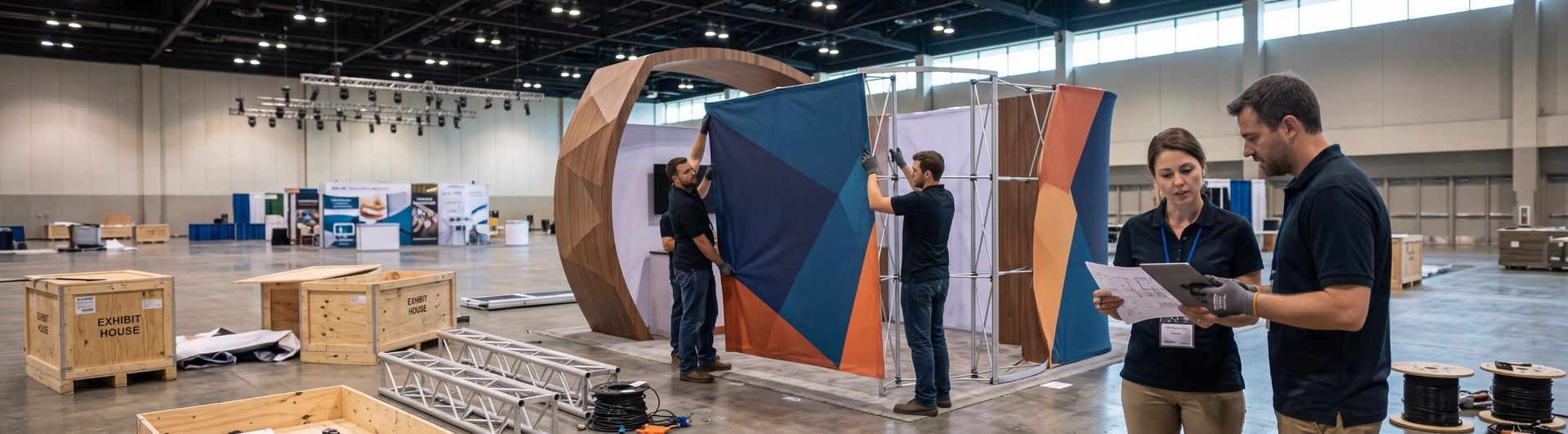
An exhibit house is a company that provides professional services related to trade show exhibits.
Depending on the company and your agreement, those services may include:
- Exhibit Design: Developing the layout, appearance, functionality, and visitor experience of your booth.
- Production: Building or supplying exhibit structures, counters, displays, graphics, and other components.
- Installation and Dismantling: Coordinating the assembly and removal of your exhibit.
- Shipping and Logistics: Helping coordinate the movement of exhibit materials between locations.
- Storage: Keeping your booth and related components between shows.
- Maintenance: Repairing, replacing, or refurbishing exhibit components.
- Project Management: Coordinating vendors, timelines, budgets, and selected show requirements.
Not every exhibit house offers every service, and the scope of responsibility can vary considerably.
That's why it's important to understand exactly what you're purchasing.
When Does Hiring an Exhibit House Make Sense?
There are several situations where professional exhibit management can be especially valuable.
1. You Have a Complex Exhibit
If your booth includes custom structures, extensive lighting, multiple demonstration areas, large graphics, or specialized equipment, managing everything yourself can become complicated.
An experienced exhibit house can help coordinate the technical details and identify potential problems before they turn into expensive surprises.
And believe me, the show floor is NOT where you want to discover that something important doesn't fit.
2. You Exhibit at Multiple Shows
If your company attends several trade shows each year, coordinating shipping, storage, repairs, and installation can become a job all by itself.
An exhibit house may help standardize these processes and reduce the administrative burden on your internal team.
This can be especially helpful when your exhibit travels between different cities or requires different configurations.
3. Your Internal Team Is Already Stretched Thin
Let's be realistic.
Your marketing team probably has responsibilities beyond trade shows.
Campaigns. Websites. Sales materials. Product launches. Meetings. Budgets. Reports.
And somewhere in there, someone needs to figure out where the booth crates are going after the next show.
If exhibit management is consuming time that should be spent on higher-value marketing activities, outsourcing some of those responsibilities may be worthwhile.
4. You Need Specialized Expertise
Professional exhibit teams understand the practical considerations involved in building, transporting, and installing trade show booths.
They may also have experience working with show contractors, venues, and other vendors.
That experience can help you avoid rookie mistakes.
However, an exhibit house's experience doesn't eliminate your responsibility to review event-specific rules, deadlines, and costs.
5. You Want More Consistency Across Shows
Working with the same exhibit partner can help maintain consistent branding, equipment condition, and installation procedures.
It also gives you an opportunity to improve your process from one show to the next.
Instead of reinventing the wheel every time, you can build on what already works.
When Might You NOT Need an Exhibit House?
An exhibit house isn't necessary for every exhibitor.
You may be perfectly capable of managing your exhibit internally if:
- You use a small, straightforward booth.
- Your exhibit is relatively easy to transport and assemble.
- Your team has experience managing show requirements.
- You have adequate storage and maintenance capabilities.
- You attend only a limited number of shows.
- Your internal resources can handle the work without sacrificing other priorities.
For example, a company using a simple portable exhibit at two regional events may not need the same level of professional support as a company managing a large custom booth at a dozen national shows.
There's no reason to pay for services you don't need.
But don't confuse doing everything yourself with saving money.
Your employees' time has value, too.
And if you're still deciding whether to own an exhibit at all, read Is It
Better to Rent or Buy a Trade Show Booth?
What Are the Advantages of Hiring an Exhibit House?
The biggest potential advantage is having experienced professionals manage exhibit-related responsibilities that might otherwise consume your team's time.
Other advantages can include:
Professional Expertise
An experienced exhibit house may recognize design, logistics, or installation issues that an occasional exhibitor could overlook.
Convenience
Having one primary exhibit partner can simplify communication and coordination.
Continuity
A partner familiar with your exhibit can maintain records, track components, and help plan improvements.
Resource Access
Depending on its capabilities, an exhibit house may provide production facilities, storage, equipment, or established vendor relationships.
More Time for Marketing
This is the benefit I really want you to think about.
When you're not spending every waking moment worrying about booth logistics, you can focus more attention on pre-show marketing, booth staff training, attendee engagement, and lead generation.
Those activities directly influence what you get out of the show.
What Are the Potential Disadvantages?
Before signing an agreement, consider the trade-offs.
Additional Costs
Professional services come with fees. You may pay for project management, storage, transportation coordination, maintenance, or other ongoing services.
Some services may be billed separately.
Make sure you understand the complete cost structure.
Less Direct Control
When responsibilities are outsourced, your team may have less direct involvement in day-to-day decisions.
That isn't necessarily bad, but it does make clear communication and approval procedures essential.
Dependence on Another Company
Your exhibit partner becomes an important part of your trade show operations.
If communication is poor, deadlines are missed, or responsibilities aren't clearly assigned, problems can affect your entire show.
Services That Don't Match Your Needs
Some exhibit houses specialize in particular types of exhibits or projects.
A company that excels at building large custom environments may not be the best fit for a business using small portable displays.
Choose based on capabilities, not just an impressive portfolio.
What Should You Ask Before Hiring an Exhibit House?
Before making a decision, get answers to these questions:
- What services are included? Clarify design, production, storage, shipping coordination, maintenance, and installation responsibilities.
- What services cost extra? Ask about project management, repairs, rush orders, handling, and other potential charges.
- Who owns the exhibit? Understand ownership of structures, graphics, design files, and other materials.
- Who coordinates show contractors? Determine who handles paperwork, orders, approvals, and deadlines.
- Who manages installation and dismantling? Confirm whether the exhibit house provides labor directly, coordinates subcontractors, or expects you to arrange it.
- What happens when something goes wrong? Ask about damaged components, late freight, missing pieces, and onsite support.
- How will communication work? Establish a primary contact, approval procedures, and timelines.
And please, get the important details in writing.
A friendly conversation is wonderful. A clear agreement is even better.
Remember: An Exhibit House Is Not Your Entire Trade Show Strategy
Here's where I see an important distinction.
An exhibit house can help you create and manage the physical environment.
But a beautiful, professionally installed booth doesn't automatically produce qualified leads.
Your team still needs to know how to engage attendees, ask the right questions, demonstrate your products, capture useful information, and follow up effectively.
That's why I believe it's so important to look at the complete trade show process.
The Tradeshow Sandwich™ reminds us that what happens before and after the event matters just as much as what happens on the show floor.
Your exhibit is part of that process, not the whole sandwich.
You can have the most impressive booth in the building and still end up disappointed if nobody knows what they're supposed to accomplish.
So, Should You Hire an Exhibit House?
The best answer comes down to value.
Consider the complexity of your exhibit, the number of shows you attend, your internal resources, and the cost of managing everything yourself.
Then compare those factors against the services and expertise an exhibit house can provide.
Sometimes hiring professional support is the smartest investment.
Sometimes handling certain responsibilities internally makes more sense.
And sometimes the best solution is a combination of both.
The important thing is to make the decision intentionally, based on your business goals rather than simply doing what you've always done.
Because successful exhibiting isn't about having the biggest budget or the fanciest booth.
It's about making smart decisions that help turn your trade show investment into measurable business results.
Make Every Trade Show Decision Count
Whether you manage your exhibit internally or work with an exhibit house, Booth Boss Bootcamp helps you understand the bigger picture, from planning and budgeting to booth performance and lead generation.
The more you know, the more confidently you can make decisions, manage vendors, avoid costly mistakes, and demonstrate the value of your trade show program.
Frequently Asked Questions
Is an exhibit house the same as a trade show general contractor?
No. An exhibit house typically provides exhibit-related design, production, logistics, or management services for individual exhibitors. A general service contractor is generally hired by the event organizer to provide show-wide services. Their responsibilities can overlap, but they serve different roles.
Can you hire an exhibit house just for installation and dismantling?
Often, yes. Some exhibit houses offer individual services, including installation and dismantling coordination, without requiring a full-service agreement. Confirm the scope, labor arrangements, and any event-specific contractor requirements before hiring.
Does hiring an exhibit house save money?
It can, but savings aren't guaranteed. Professional coordination may help avoid mistakes, improve efficiency, or reduce internal labor demands. Compare all service fees and operating costs against the time, resources, and risks involved in managing the exhibit yourself.
Recent Posts