What Is the Difference Between a Portable and Modular Exhibit?
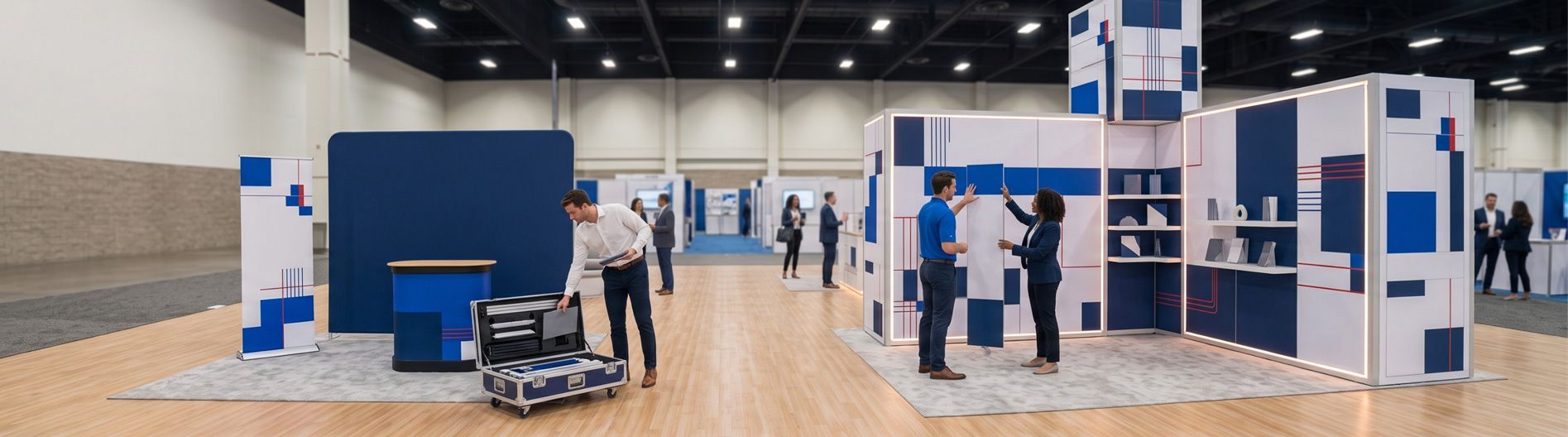
The biggest difference between a portable and modular trade show exhibit is what each one is designed to do. A portable exhibit is primarily designed to be lightweight, easy to transport, and relatively simple to set up. A modular exhibit is designed around interchangeable components that can be rearranged, expanded, or reduced to accommodate different booth sizes and configurations.
In plain English? Portable is about ease. Modular is about flexibility.
And yes, the terminology can get confusing because an exhibit can technically have characteristics of both. Welcome to the trade show industry, where apparently we needed one more thing to make your job harder.
What Is a Portable Trade Show Exhibit?
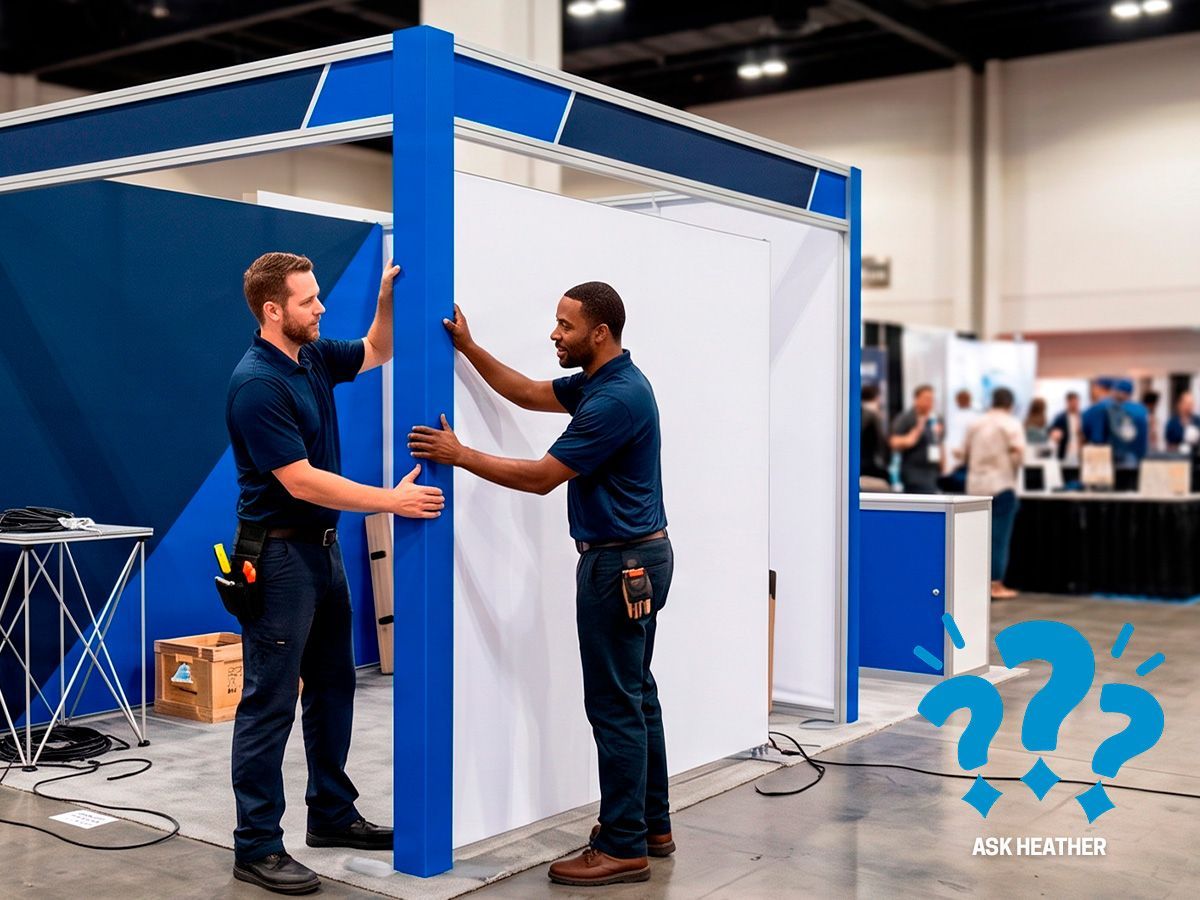
A portable trade show exhibit is a lightweight display system designed to be packed, transported, set up, and dismantled without the logistics normally associated with a larger exhibit.
Common portable exhibits include:
- Pop-up displays
- Tension-fabric backwalls
- Banner stands
- Tabletop displays
- Lightweight counters and accessories
Portable systems are commonly used in 10' x 10' and 10' x 20' inline booth spaces, although the exact capabilities depend on the system you purchase. Many pack into wheeled cases or bags and are designed so an exhibitor can transport and assemble them without a specialized installation crew.
That simplicity can be a big advantage if you're attending smaller shows, regional events, conferences, recruiting events, or multiple events where hauling a larger exhibit around would be overkill.
Think of a portable exhibit as the carry-on suitcase of the trade show world. It may not hold everything in your closet, but when you're trying to get in, get set up, and get out without creating a logistical circus, it can be exactly what you need.
What Is a Modular Trade Show Exhibit?
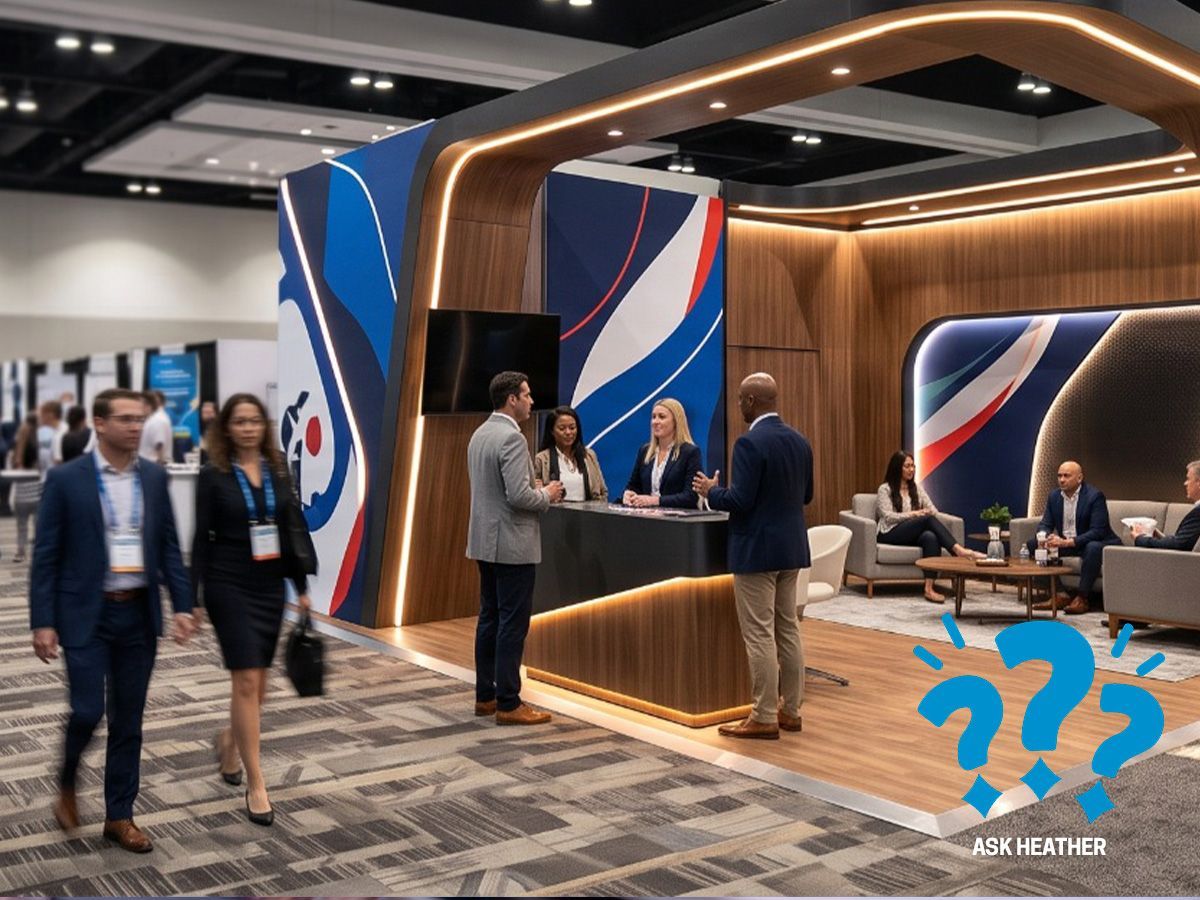
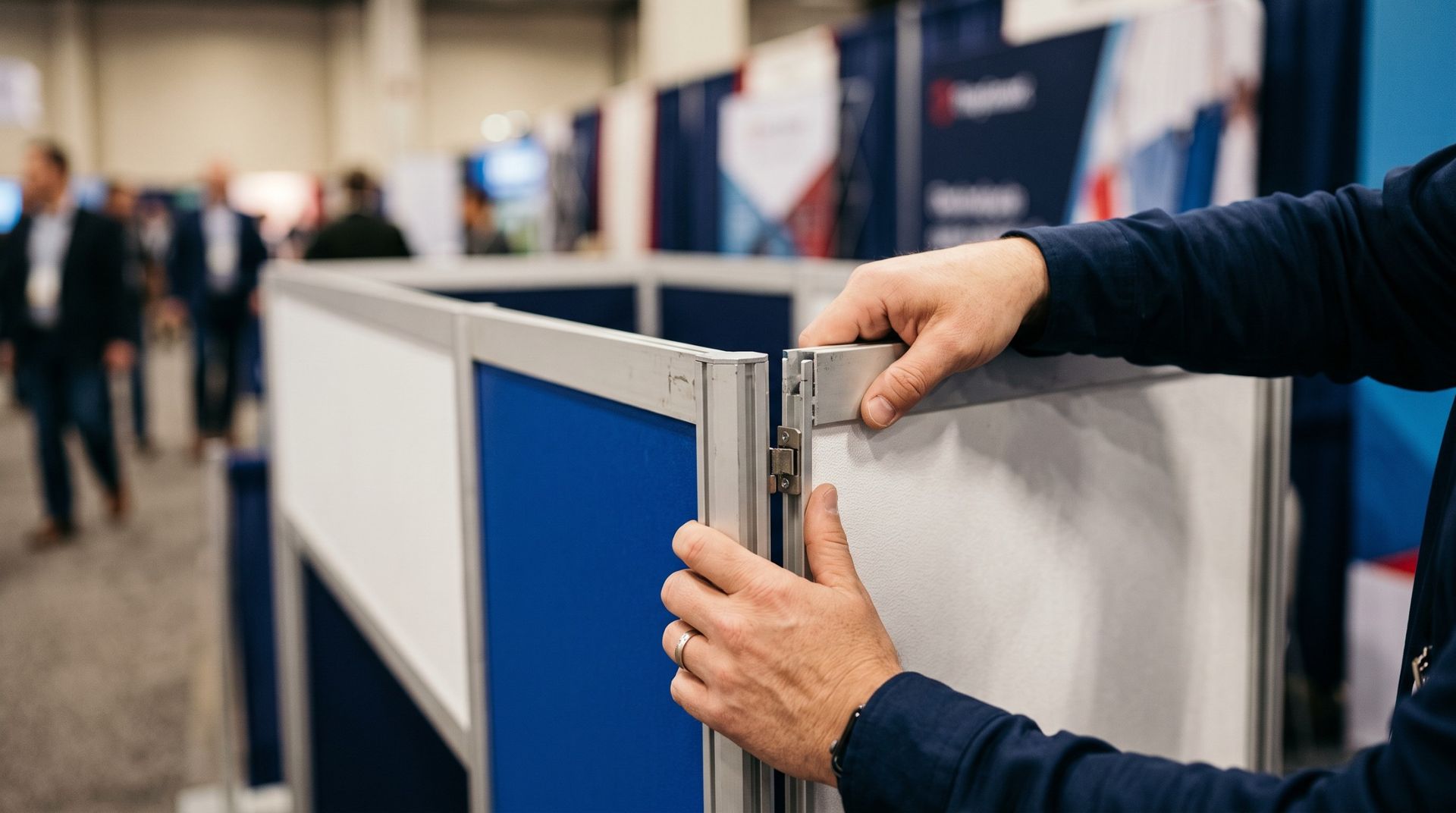
A modular exhibit is built from interchangeable components that can be assembled in different configurations. Depending on the system, those components might include frames, wall panels, towers, lightboxes, counters, shelving, monitor mounts, storage, graphics, and other elements.
The real advantage is adaptability.
For example, you might invest in a modular system that can use some of the same components for a 10' x 10' booth at one show and a 10' x 20' configuration at another. More sophisticated modular systems may accommodate even larger footprints.
That can be extremely valuable if your trade show schedule looks something like this:
10' x 10'.
10' x 20'.
20' x 20'.
Back to 10' x 10'
Because of course every show couldn't possibly offer you the same booth size. That would be far too convenient.
A well-planned modular system allows you to reuse assets instead of treating every footprint like an entirely new exhibit project.
Portable vs. Modular: What's the Practical Difference?
Here's the easiest way to think about it:
| Portable Exhibit | Modular Exhibit |
|---|---|
| Prioritizes easy transportation | Prioritizes reconfiguration |
| Typically lighter and more compact | Typically uses more substantial components |
| Often designed for smaller booth spaces | Can accommodate a wider range of booth sizes |
| Usually simpler and faster to assemble | May require more assembly or professional labor |
| Often travels in portable cases | May require larger cases, crates, or freight |
| Good when simplicity is the priority | Good when flexibility is the priority |
| Generally has fewer structural options | Can support more architectural and functional elements |
Those aren't absolute rules. Exhibit systems have evolved considerably, and manufacturers increasingly combine lightweight materials, modular components, fabric graphics, lighting, monitors, and other features. That's why you'll sometimes hear terms such as "portable modular" used together.
Don't get hung up on the label. Get clear on what the exhibit actually needs to accomplish.
Is a Modular Exhibit Better Than a Portable Exhibit?
Not necessarily.
A modular exhibit isn't automatically "better" because it's bigger, more flexible, or more elaborate. And a portable booth isn't automatically the cheap little cousin sitting at the kids' table.
The right choice depends on your trade show program.
If you primarily exhibit in smaller spaces and your team needs something they can transport and assemble easily, portable may make perfect sense.
If you exhibit frequently, use several booth sizes, or want more flexibility in your layout and functionality, modular may be the smarter long-term investment.
Before choosing either one, look at your entire show calendar instead of shopping for one booth for one show.
That's where companies can make an expensive rookie mistake.
They buy something that works beautifully for the event sitting directly in front of them. Six months later, they discover that it doesn't work for the other five shows on their calendar.
Now they're buying more hardware, renting another exhibit, paying for modifications, or trying to shove the trade show equivalent of a square peg into a round hole.
What Should You Consider Before Choosing?
Start with how you'll actually use the exhibit. Your booth should support your trade show strategy, not force your strategy to work around the booth.
Consider:
- Your booth sizes. Do you consistently exhibit in one footprint, or do your spaces change throughout the year?
- Your show schedule. How many events will this exhibit need to handle?
- Transportation. Will employees carry or ship the display, or will you use freight?
- Installation. Does your team need something simple they can assemble themselves, or are you comfortable planning for installation labor when required?
- Storage. Where will everything live between shows?
- Functionality. Do you need monitors, shelving, product displays, storage, meeting areas, lighting, counters, or other components?
- Brand presence. What kind of environment do you need to create to compete for attention at your shows?
- Future growth. Could your booth sizes or exhibiting program change over the next few years?
And remember, installation requirements are not determined solely by whether someone calls your booth "portable" or "modular." Show and venue rules can vary, so always check the exhibitor information and service manual for the specific event before assuming your team can install an exhibit themselves.
Don't Buy a Booth. Buy a System That Fits Your Trade Show Program.
This is the part I really want you to remember.
You're not buying a pretty backdrop for one event.
You're investing in an asset that needs to work with your booth sizes, show schedule, staff, shipping plan, storage situation, marketing goals, and budget.
A gorgeous modular exhibit that creates logistical headaches at every show isn't a great investment.
A wonderfully portable exhibit that disappears visually at your most important industry event isn't a great investment either.
Start with what you're trying to accomplish. Then choose the exhibit system that helps you accomplish it with the least amount of wasted money, unnecessary stress, and "well, we didn't think about THAT" moments.
That's how a Booth Boss approaches the decision.
Frequently Asked Questions
Can a portable trade show exhibit also be modular?
Yes. The categories can overlap. Some lightweight portable systems contain interchangeable components that can be rearranged or expanded, making them portable and modular. Focus on the system's actual transportation, setup, configuration, and expansion capabilities rather than relying solely on the manufacturer's label.
Which is easier to transport, a portable or modular exhibit?
Portable exhibits are generally designed specifically for easier transportation and typically pack into smaller cases or bags. Modular exhibits can involve more or larger components depending on the size and complexity of the system.
Which exhibit is better if my company uses different booth sizes?
A modular exhibit is generally the stronger choice when reconfiguration is a major requirement because its interchangeable components can be used in different arrangements and, depending on the system, different booth footprints. Before purchasing, have the exhibit provider show you exactly how the proposed system will configure for the booth sizes on your actual show schedule.
Recent Posts