

What Makes a Trade Show Successful?

Heather Bundgaard • July 24, 2026

Share this article

Success at a trade show isn't measured by how many people walked past your booth.


Or how many tote bags you handed out.


Or even how many business cards you collected.


A successful trade show is one that helps you achieve the goals you set before the event. For some companies, that's generating qualified leads. For others, it's launching a new product, strengthening customer relationships, increasing brand awareness, or closing deals already in progress.


The companies that consistently succeed don't rely on luck.


They prepare long before the exhibit hall opens, execute with purpose during the event, and follow through after everyone goes home.


Here's what truly makes a trade show successful.

Four colleagues collaborating around a table with laptops and papers in a modern office meeting room

Set Clear Goals Before the Show

Success starts with defining what you're trying to accomplish.


Without clear objectives, it's impossible to know whether your trade show investment paid off.


Before registering for an event, ask yourself:


  • Are you trying to generate qualified leads?
  • Meet with existing customers?
  • Launch a new product?
  • Build brand awareness?
  • Recruit employees?
  • Enter a new market?
  • Strengthen relationships with distributors or partners?


Your answers will influence nearly every decision you make—from your booth design and messaging to your staffing and follow-up strategy.

Choose the Right Trade Show

Not every trade show is worth exhibiting at.


The largest show isn't necessarily the most profitable.


Instead, evaluate whether the event attracts:


  • Your ideal customers.
  • Decision-makers with buying authority.
  • The industries you serve.
  • Companies that match your target market.


A smaller niche trade show often produces better results than a massive event filled with people who aren't potential customers.

Success begins by exhibiting where the right audience already gathers.

Plan Your Pre-Show Marketing

One of the biggest misconceptions about trade shows is that the event begins when the doors open.


In reality, successful exhibitors start marketing weeks—or even months—in advance.


Consider:


  • Sending email invitations to customers and prospects.
  • Announcing your booth location on social media.
  • Scheduling meetings before the show.
  • Promoting demonstrations or product launches.
  • Inviting attendees to exclusive presentations.
  • Giving people a compelling reason to visit your booth.


Many attendees create their schedules before they ever arrive at the convention center.


If they don't know you're exhibiting, they can't plan to visit you.

Create a Booth That Invites Conversations

An attractive booth gets noticed.


An engaging booth gets results.


Your exhibit should quickly communicate:


  • Who you help.
  • What problem you solve.
  • Why visitors should stop.


Interactive demonstrations, engaging displays, and clear messaging encourage attendees to start conversations instead of simply walking by.


Remember, the goal isn't just to attract attention.


It's to attract the right people.

Train Your Booth Staff

Your booth staff will have a greater impact on your success than your booth graphics ever will.


Visitors remember conversations.


They remember enthusiasm.


They remember how your team made them feel.


That's why it's essential to train your booth staff for a trade show before the event.


Your team should know how to:


  • Welcome attendees naturally.
  • Start meaningful conversations.
  • Qualify leads.
  • Answer common questions.
  • Demonstrate products confidently.
  • Capture useful lead information.
  • Represent your brand professionally.


Even the most impressive booth can't overcome an unprepared team.

Two people talking at a trade show booth in a bright exhibition hall, with attendees in the background

Focus on Quality Conversations

Many exhibitors celebrate booth traffic.


Successful exhibitors celebrate qualified conversations.


One conversation with the right buyer is often more valuable than one hundred people stopping for free giveaways.


Instead of measuring how busy your booth looked, ask:


  • Did we speak with decision-makers?
  • Did we identify qualified opportunities?
  • Did we schedule follow-up meetings?
  • Did we uncover customer challenges we can solve?


Meaningful conversations drive meaningful results.

Capture Better Leads

Generating leads isn't enough.


You need information your sales team can actually use.


Every lead should include:


  • Contact information.
  • Company name.
  • Job title.
  • Products or services discussed.
  • Specific challenges.
  • Buying timeline.
  • Next steps.


Detailed notes dramatically improve post-show follow-up and help your sales team personalize future conversations.

Follow Up Quickly

The trade show doesn't end when you pack up your booth.


In many ways, that's when the real work begins.


Prompt follow-up keeps your company fresh in attendees' minds while your conversations are still memorable.


Don't simply send a generic "nice meeting you" email.


Reference your conversation, provide the resources you promised, and explain the next step.


Companies that follow up consistently often outperform companies that collected more leads but waited too long to reconnect.

Measure Your Results

Every trade show should teach you something.


After the event, review metrics such as:


  • Qualified leads generated.
  • Sales meetings scheduled.
  • Opportunities added to the pipeline.
  • Revenue influenced.
  • Cost per qualified lead.
  • Return on investment.
  • Booth traffic.
  • Staff performance.
  • Lessons learned.


The more you measure, the more you improve.

Learn and Improve Every Time

No trade show is perfect.


The most successful exhibitors treat every event as an opportunity to learn.


Ask your team:


  • What attracted the most visitors?
  • Which conversation starters worked best?
  • What questions came up repeatedly?
  • What objections did attendees raise?
  • What should we change before the next show?


Small improvements made consistently can produce dramatically better results over time.

The Bottom Line

What makes a trade show successful isn't one spectacular booth feature or one lucky conversation.


It's the combination of thoughtful planning, a well-trained team, engaging attendee interactions, consistent follow-up, and a commitment to continuous improvement.


Companies that generate the strongest trade show ROI don't simply hope for success.


They define it, prepare for it, measure it, and improve it.


Because the most successful trade shows begin long before the exhibit hall opens—and continue long after it closes.

Frequently Asked Questions

  • How do you measure whether a trade show was successful?

    The best way to measure trade show success is by comparing your results against the goals you set before the event. Key metrics include qualified leads generated, meetings scheduled, sales opportunities created, revenue influenced, cost per lead, and overall return on investment (ROI). A successful trade show isn't necessarily the busiest one—it's the one that delivers measurable business results.

  • What is the biggest mistake companies make at trade shows?

    One of the biggest mistakes is exhibiting without a clear strategy. Many companies invest heavily in booth space and displays but fail to define objectives, train their booth staff, or plan their follow-up. Without clear goals and a process for engaging attendees and nurturing leads, it's difficult to achieve a positive return on your trade show investment.

  • Is a successful trade show only about generating leads?

    No. While lead generation is a common objective, success depends on your company's goals. A trade show can also be successful if it helps you launch a new product, strengthen relationships with existing customers, increase brand awareness, recruit employees, conduct market research, or establish new partnerships. The key is defining success before the event and measuring your results afterward.

Recent Posts

Graphic of what needs to be done before a tradeshow
By Heather Bundgaard August 3, 2026
What do you do to increase your odds of closing deals with new leads from trade shows?
Lego picture depicting action
By Heather Bundgaard August 1, 2026
If you have ever arrived at a show, looked around and thought "I really hope this works", you already know how uncomfortable it feels to wing it.
Picture of very tall woman standing over trade show booths
By Heather Bundgaard July 29, 2026
Booth Boss Bootcamp is an online platform for people who exhibit at trade shows in the United States and who want to stop winging it.
Trade show booth with blue-and-white displays; two people assemble a frame while others browse in the background
By Heather Bundgaard July 28, 2026
Compare renting vs. buying a trade show booth. Learn the pros, cons, costs, and key factors to choose the best option for your trade show strategy and budget.

Woman at a desk reviewing how much a trade show costs next to a laptop in an office
By Heather Bundgaard July 28, 2026
Learn how much a trade show costs, including booth space, travel, staffing, shipping, marketing, and other expenses that impact your ROI.

Picture of people walking by a trade show booth
By Heather Bundgaard July 27, 2026
Booth Boss Bootcamp is an online platform created for people who exhibit at trade shows in the United States and want to stop guessing their way through lead generation.
Three business people reviewing papers at a trade show booth with blue digital displays
By Heather Bundgaard July 24, 2026
Learn how many booth staff you need based on booth size, traffic, staffing roles, and lead generation goals.
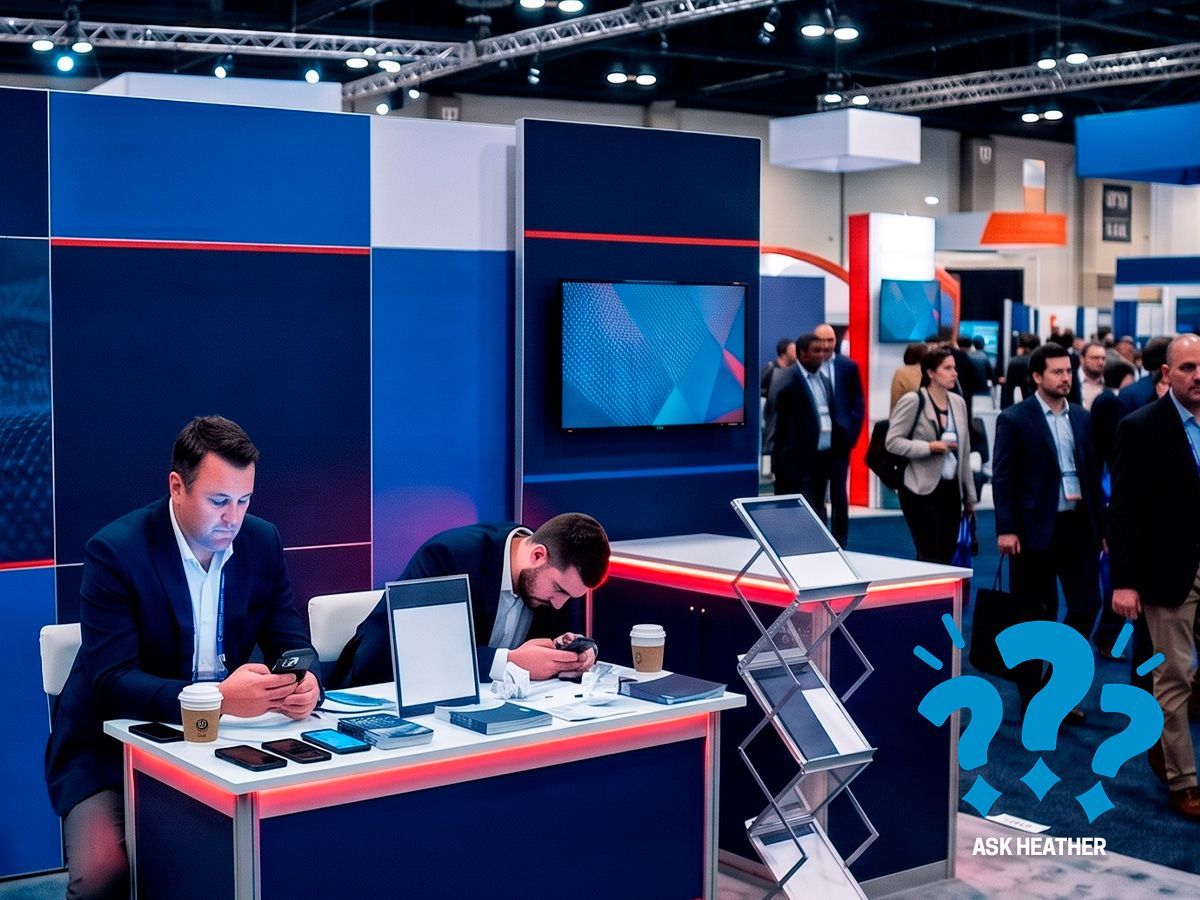
Trade show booth with two staff at a table, blue-lit convention hall, and attendees browsing nearby.
By Heather Bundgaard July 24, 2026
Discover the most common trade show mistakes and learn how to improve booth performance, lead generation, and ROI.
Three coworkers reviewing a tablet at a trade show booth, smiling and discussing ideas.
By Heather Bundgaard July 24, 2026
Learn how to generate more leads at a trade show with better conversations, lead qualification, follow-up, and booth strategy.
Staff talking at a trade show booth with blue signage and brochures
By Heather Bundgaard July 24, 2026
Learn what booth staff should do at a trade show to engage attendees, qualify leads, and maximize trade show results.
Show More