
What Should Booth Staff Do at a Trade Show?
Your booth staff can make or break your trade show results.
You can have the best booth location.
The biggest budget.
The most eye-catching display.
But if your team doesn't know what they're supposed to do, you'll miss opportunities all day long.
Too often, I see booth staff standing in a group talking to each other, checking their phones, or waiting for attendees to make the first move.
Successful exhibitors do the opposite.
Their booth staff is engaged, approachable, and intentional from the moment the exhibit hall opens until it closes.
So, what should booth staff actually do at a trade show?
Let's walk through it.
Welcome Attendees
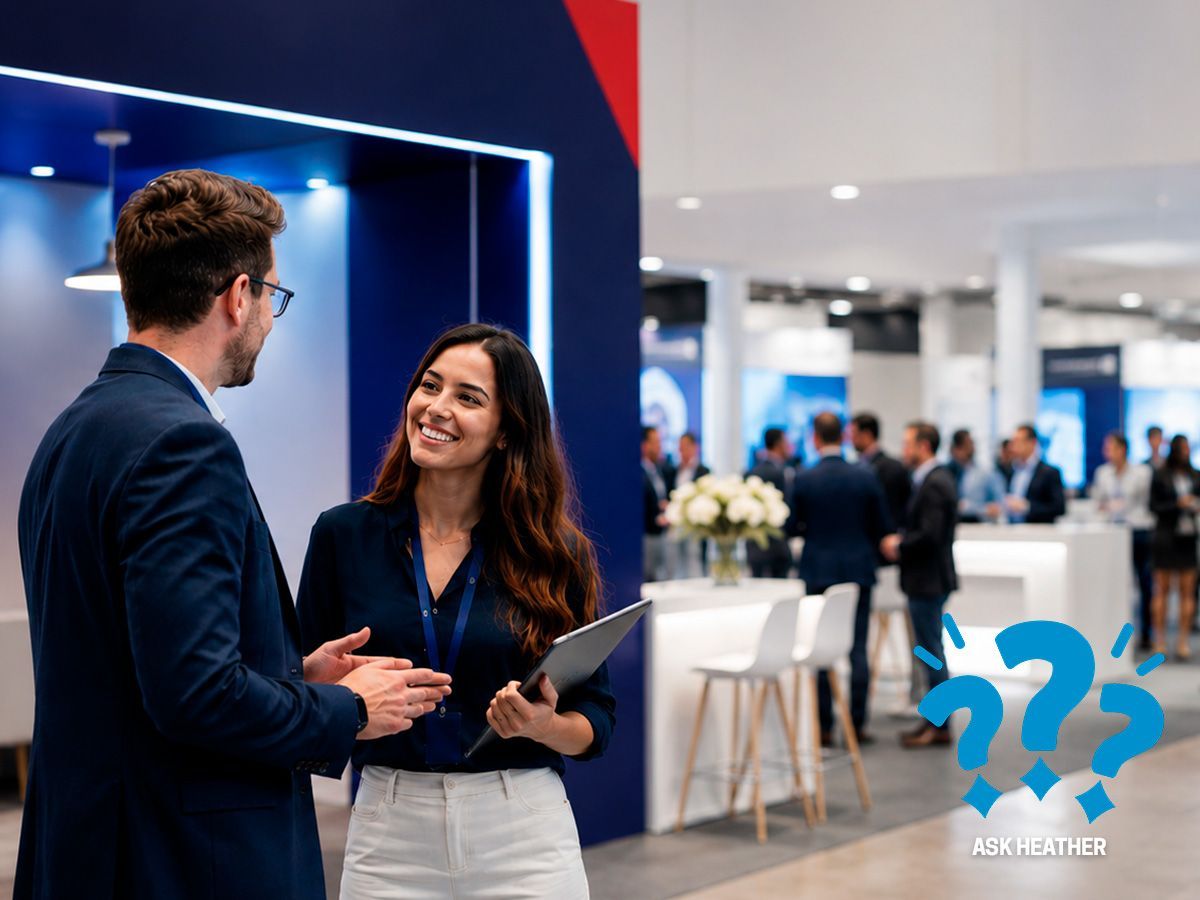
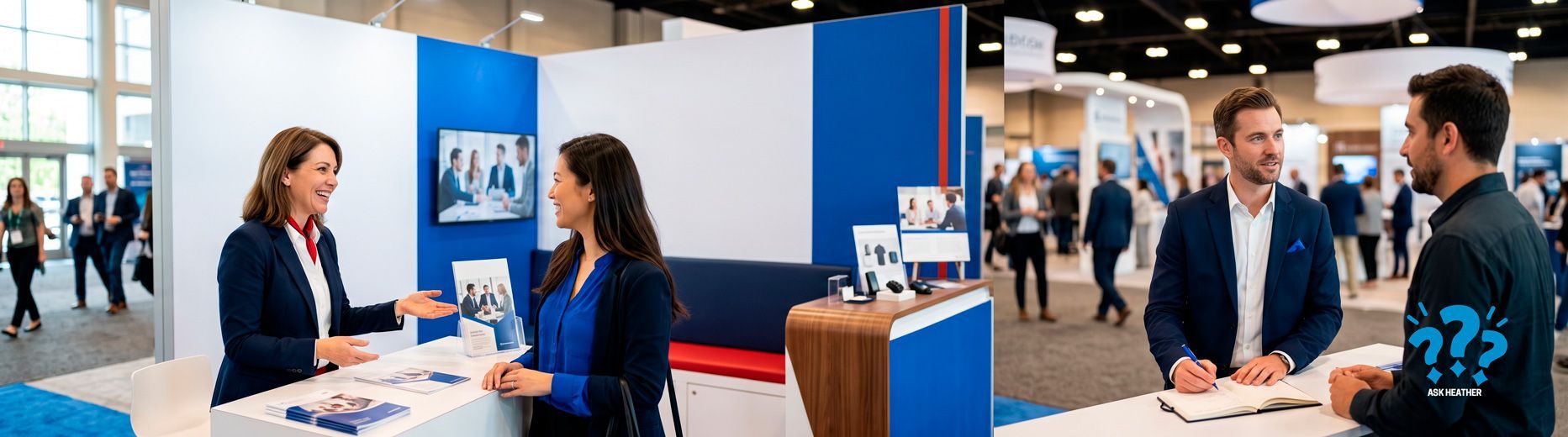
The first responsibility of every booth staff member is making visitors feel welcome.
That doesn't mean aggressively stopping everyone who walks by.
It means being approachable.
Smile.
Stand near the aisle.
Make eye contact.
Offer a friendly greeting as attendees pass.
Something as simple as "Good morning! What brings you to the show today?" is often enough to start a conversation.
People are much more likely to stop when they feel invited instead of pressured.
Start Meaningful Conversations
Your booth staff shouldn't wait for attendees to approach.
They should confidently initiate conversations.
The goal isn't to launch into a sales pitch.
It's to learn about the visitor.
Ask open-ended questions like:
- What brings you to the show?
- What are you hoping to accomplish today?
- What challenges are you trying to solve?
- Have you seen anything interesting so far?
The best conversations focus on the attendee—not your company.
Listen More Than You Talk
One of the biggest mistakes booth staff make is talking too much.
Visitors don't come to hear a rehearsed presentation.
They want solutions to their problems.
Encourage your team to:
- Listen carefully.
- Ask follow-up questions.
- Understand the visitor's needs.
- Adapt the conversation accordingly.
The more your staff listens, the easier it becomes to recommend the right products or services.
Qualify Visitors
Not everyone who stops at your booth is a potential customer.
That's okay.
Your booth staff should learn to identify qualified prospects by understanding:
- Their role.
- Their company.
- Their challenges.
- Their buying authority.
- Their timeline.
- Whether your solution is a good fit.
Qualifying leads helps your sales team spend more time following up with the people most likely to become customers.
Demonstrate Products with Purpose
If you're offering demonstrations, make them relevant.
Avoid overwhelming visitors with every feature your product offers.
Instead, focus on the capabilities that solve the specific problems the attendee has shared.
Personalized demonstrations are far more memorable than generic presentations.
Represent Your Brand Professionally
Every interaction shapes how attendees perceive your company.
Professional booth staff should:
- Smile.
- Dress appropriately.
- Maintain positive body language.
- Speak confidently.
- Stay enthusiastic throughout the day.
Visitors remember how your team made them feel long after they've forgotten your booth graphics.
Practice Good Booth Etiquette
Attendees notice everything.
They notice when staff members:
- Sit behind tables.
- Eat in the booth.
- Look at their phones.
- Talk only to coworkers.
- Block the entrance.
- Ignore people walking past.
These behaviors send the message that visitors aren't welcome.
Instead, your team should remain engaged and attentive throughout the event.
Capture Complete Lead Information
Collecting a badge scan isn't enough.
Your team should record valuable details while the conversation is still fresh.
Include information such as:
- Contact information.
- Company.
- Job title.
- Products discussed.
- Specific challenges.
- Buying timeline.
- Agreed next steps.
Good notes make follow-up significantly more effective.
Introduce the Right Team Members
No single booth staff member has to know everything.
If a visitor needs technical information, introduce them to a product specialist.
If they're an existing customer, connect them with their account manager.
If they're ready to discuss pricing, involve the appropriate salesperson.
Smooth introductions create a better attendee experience and ensure questions are answered by the right people.
Stay Engaged Until the Show Ends
One of the biggest mistakes happens during slow periods.
Instead of standing around waiting, booth staff can:
- Straighten marketing materials.
- Review lead notes.
- Practice conversation starters.
- Prepare for scheduled meetings.
- Observe attendee traffic patterns.
There is always something productive to do.
Professional exhibitors remain engaged until the event officially closes.
The Bottom Line
Booth staff do much more than greet visitors.
They create first impressions.
Start conversations.
Build relationships.
Qualify opportunities.
Represent your brand.
Capture valuable information.
And ultimately determine whether your trade show investment produces meaningful business results.
The companies that consistently generate the strongest results don't simply send employees to work the booth.
They train them to engage attendees with confidence, professionalism, and purpose.
Because at the end of the day, people don't buy from booths.
They buy from people.
Frequently Asked Questions
What is the role of booth staff at a trade show?
Booth staff are responsible for welcoming attendees, starting conversations, qualifying leads, demonstrating products or services, capturing lead information, and representing the company's brand professionally. Their primary goal is to engage the right visitors and help turn conversations into business opportunities.
Should booth staff approach attendees or wait for them?
Booth staff should take the initiative by greeting attendees and starting natural conversations. Waiting for people to approach often results in missed opportunities, while a friendly, non-pushy welcome encourages more meaningful interactions.
What should booth staff avoid doing at a trade show?
Booth staff should avoid sitting in the booth, eating in front of attendees, using their phones, talking only with coworkers, or ignoring visitors. These behaviors make the booth feel uninviting and can discourage potential customers from stopping to learn more.