
How Many Booth Staff Should You Have at a Trade Show?
One of the most common questions exhibitors ask is:
"How many people should we send to work our trade show booth?"
The answer isn't a specific number.
It depends on your booth size, expected traffic, the complexity of your products, and your trade show goals.
Send too few people, and you'll miss valuable conversations because your staff can't keep up.
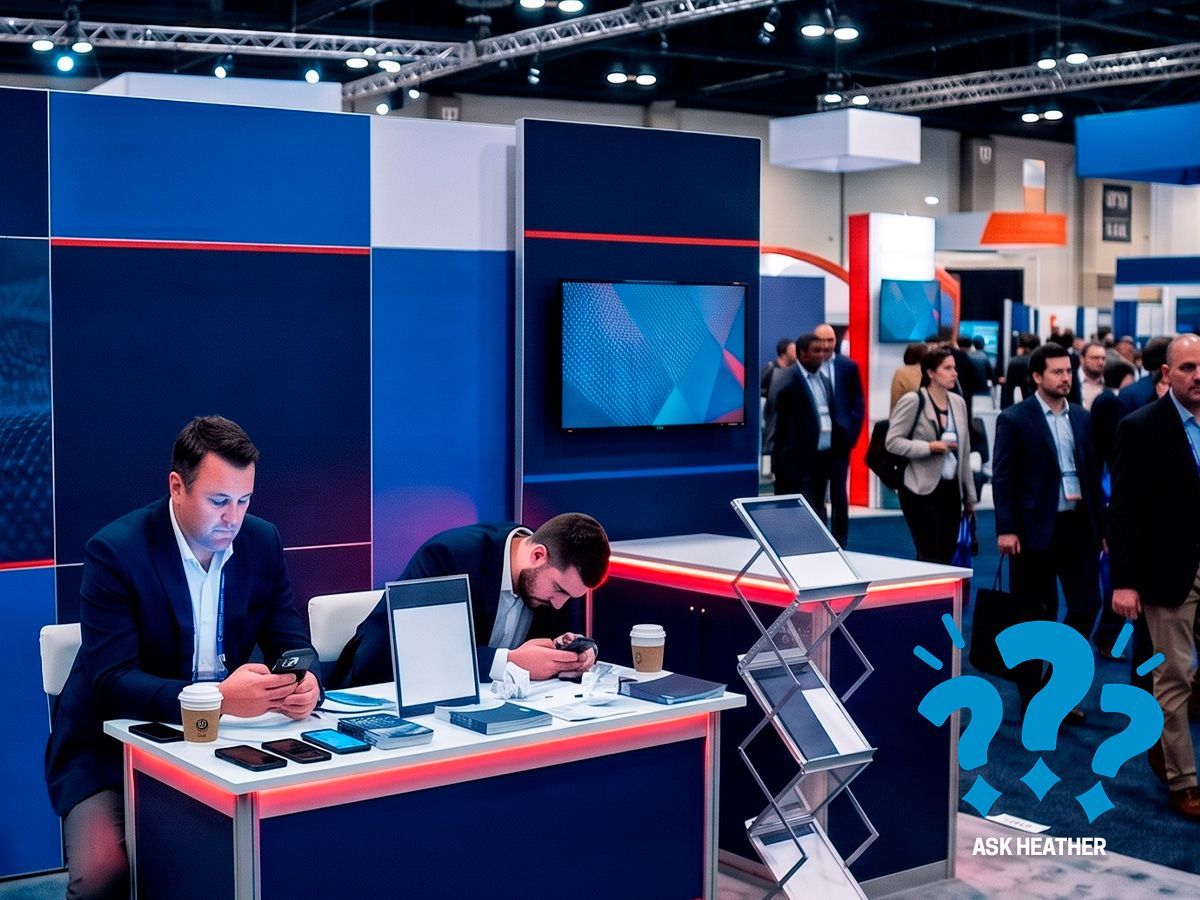
Send too many, and visitors may feel overwhelmed—or worse, your employees end up standing around talking to each other.
The goal isn't to have the biggest team.
It's to have the right team.
Start With Your Booth Size
Your exhibit size is a good starting point.
While every company is different, here's a general guideline:
| Booth Size | Recommended Booth Staff |
|---|---|
| 10' × 10' | 2–3 people |
| 10' × 20' | 3–5 people |
| 20' × 20' | 5–8 people |
| Large island exhibit | 8+ people, depending on traffic and activities |
Remember, these numbers include staff rotating through breaks—not everyone should be in the booth at the same time.
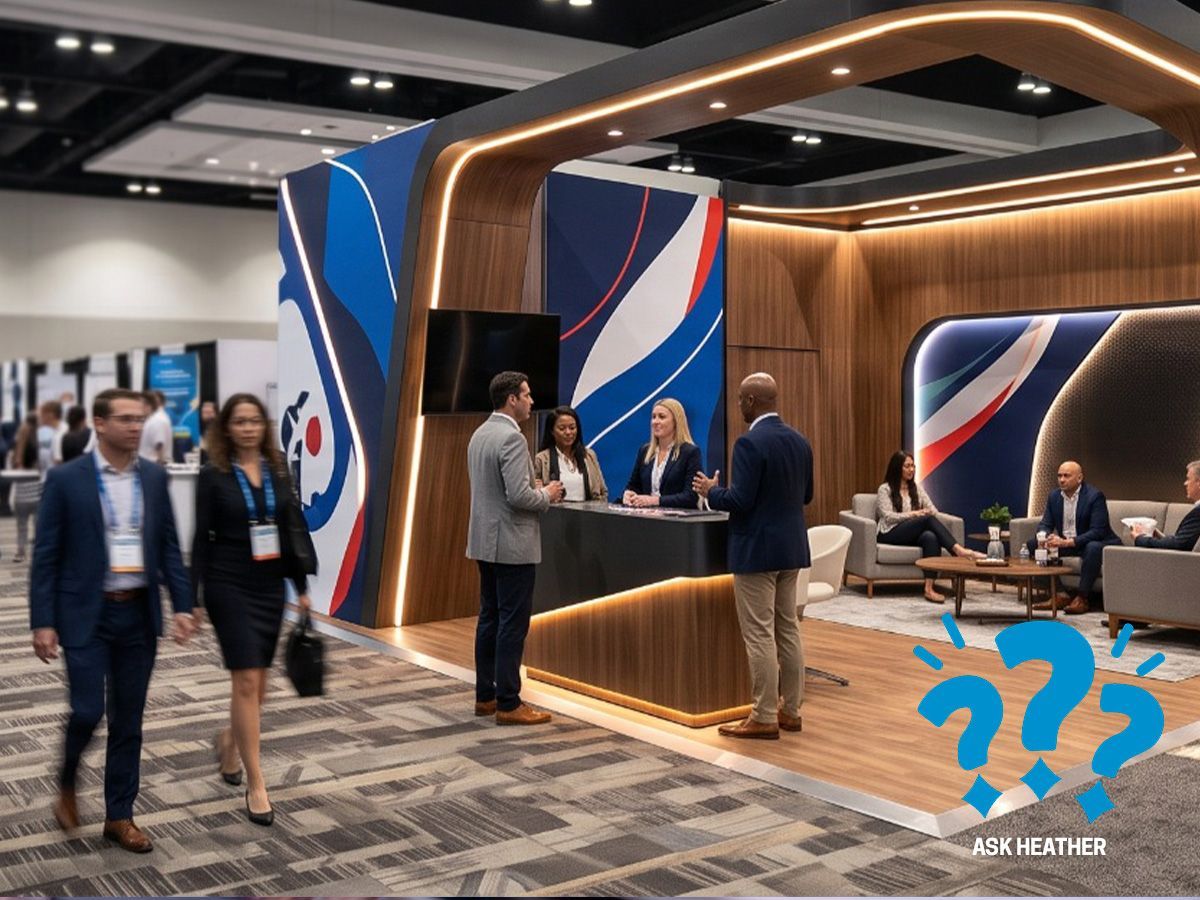
A crowded booth often feels less inviting than one with enough space for attendees to browse comfortably.
Consider Expected Booth Traffic
A busy booth needs more staff than a quiet one.
Ask yourself:
- How many attendees are expected?
- How much foot traffic does your booth location typically receive?
- Are you demonstrating products throughout the day?
- Are appointments already scheduled?
- Are you launching a new product or promotion?
If you expect a constant stream of visitors, you'll need enough staff to greet newcomers while continuing conversations with qualified prospects.
No attendee should walk away simply because everyone was busy.
Match Staffing to Your Goals
Think about what you want your booth staff to accomplish.
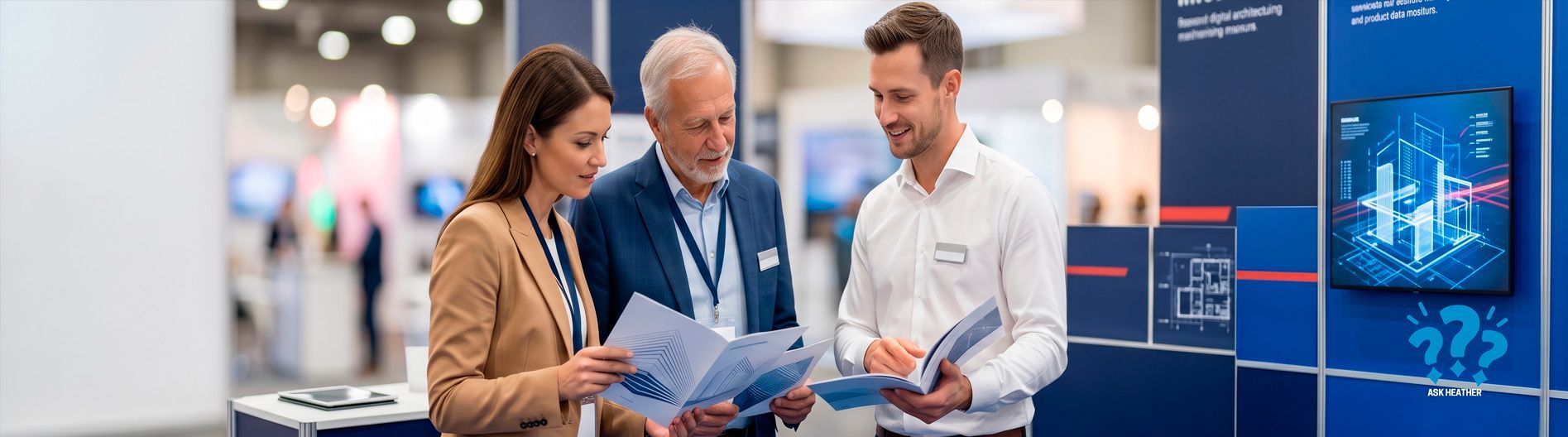
If your goal is lead generation, you'll likely need more people focused on greeting visitors, qualifying prospects, and capturing lead information.
If you're demonstrating complex products, you may need technical specialists available to answer detailed questions.
If customer meetings are a priority, assign staff specifically to scheduled appointments while others continue engaging walk-up attendees.
Your staffing plan should support your objectives—not just fill space.
Assign Clear Roles
One of the biggest mistakes companies make is sending several employees without assigning responsibilities.
That's when you see:
- Everyone talking to the same attendee.
- Nobody greeting people walking by.
- Confusion about who should conduct demonstrations.
- Leads slipping through the cracks.
Instead, assign roles such as:
- Booth Manager
- Greeter
- Conversation Starter
- Product Specialist
- Demonstration Leader
- Lead Recorder
- Customer Success Representative
In smaller booths, one person may perform multiple roles.
The important thing is that everyone understands their responsibilities before the show begins.
Plan for Breaks
Trade shows are physically demanding.
Your team will spend long hours standing, talking, and interacting with attendees.
Without scheduled breaks, energy levels drop—and visitors notice.
Create a staffing schedule that allows people to:
- Eat meals away from the booth.
- Take short breaks.
- Attend educational sessions when appropriate.
- Stay energized throughout the day.
A smaller team with planned rotations usually performs better than a larger team that's exhausted.
Avoid Overstaffing
Many companies assume more people equals better results.
Often, the opposite is true.
Too many staff members can create problems such as:
- Employees talking only to each other.
- Visitors feeling intimidated.
- Congested booth space.
- Inconsistent messaging.
- Reduced accountability.
If several employees don't have a clear purpose, they probably shouldn't be standing in the booth.
Train Every Team Member
Sending the right number of people isn't enough.
Every person working the booth should understand:
- Your trade show goals.
- Your ideal customer.
- How to start conversations.
- How to qualify leads.
- Booth etiquette.
- The lead capture process.
- Their specific responsibilities.
A well-trained team of four will often outperform an unprepared team of eight.
Quality always beats quantity.
Review Your Results
After the show, evaluate whether your staffing level was appropriate.
Ask questions like:
- Were attendees ever left waiting?
- Did we miss opportunities because everyone was busy?
- Did some staff members have long periods with nothing to do?
- Were breaks easy to manage?
- Did we have the right mix of sales, technical, and customer support staff?
Use those lessons to improve your staffing plan for your next event.
The Bottom Line
There isn't a universal answer to how many booth staff you should have at a trade show.
The right number depends on your booth size, expected traffic, objectives, and the complexity of your products or services.
Rather than sending as many employees as your budget allows, focus on building a team with clear responsibilities, proper training, and enough coverage to engage every qualified attendee.
Because trade show success isn't determined by how many people are standing in your booth.
It's determined by how effectively those people connect with visitors, generate meaningful conversations, and turn opportunities into customers.
Frequently Asked Questions
Can you have too many booth staff at a trade show?
Yes. Too many people can make your booth feel crowded and intimidating to attendees. It can also lead to staff talking among themselves instead of engaging visitors. Every team member should have a clear role and purpose.
Should everyone from the sales team work the trade show?
Not necessarily. Choose employees based on their communication skills, product knowledge, and ability to engage attendees. In many cases, a smaller, well-trained team will outperform a larger group with little trade show experience.
How do you schedule booth staff during a trade show?
Create a rotation schedule that ensures continuous booth coverage while allowing staff to take breaks, eat meals, attend important sessions, and stay energized. Avoid having the entire team in the booth at once unless traffic demands it.